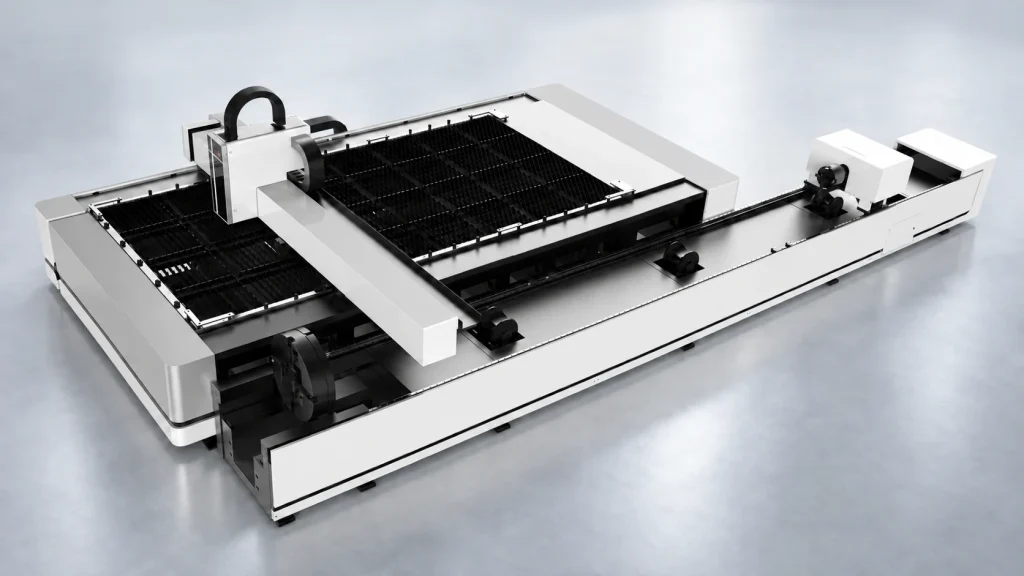
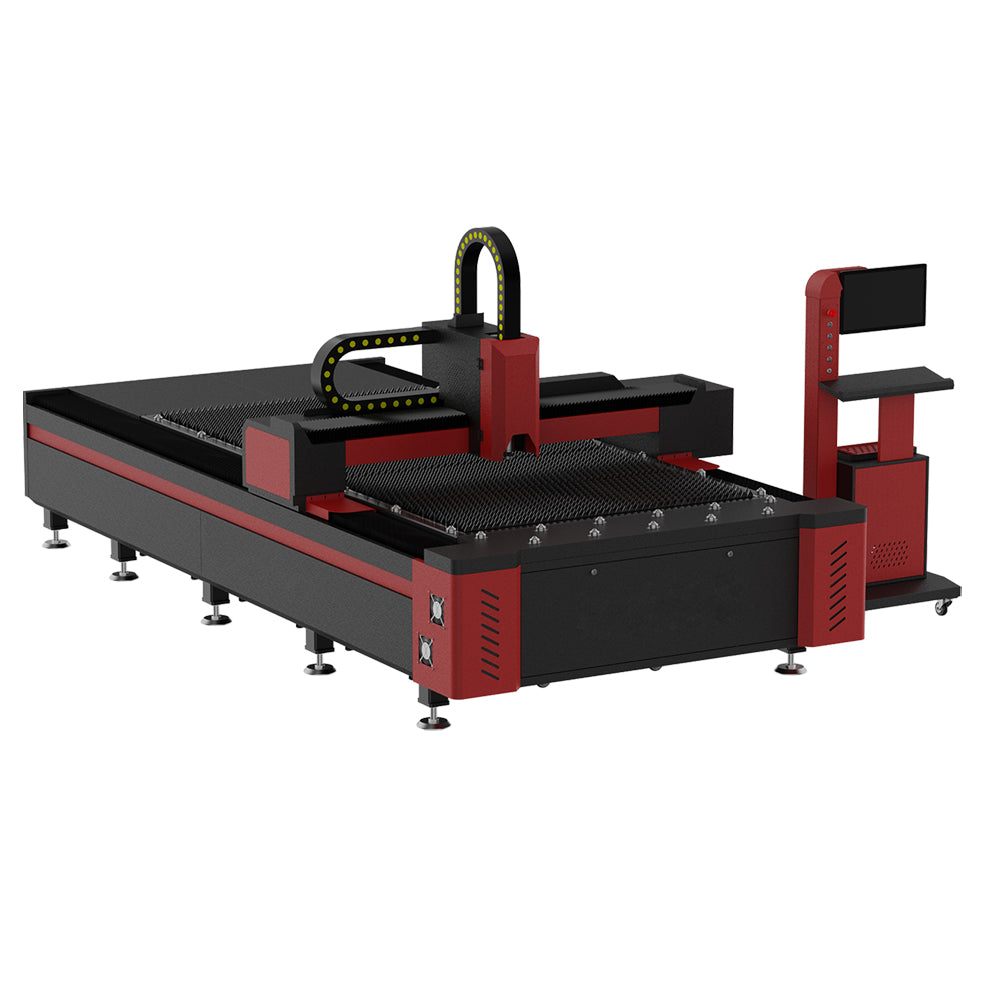
 3 kW Fiber Laser Cutting Machine
Two-Chuck vs Three-Chuck Tube Lasers
Compare the complete gripping and handling sequence. Review tube support, finished-part collection and remnants on the same representative job.
The choice between a two-chuck and a three-chuck tube laser is a choice about how your stock and finished parts are held through the cutting cycle. Compare the gripping sequence, support, transfer and unloading on representative parts. Chuck count alone does not establish accuracy, output or a guaranteed remnant length.
Separate gripping from stock support
Chucks grip the tube during the machine’s operating sequence; roller or follow-up supports perform a different role in supporting the stock. A two-chuck machine can still use additional supports. For example, HSG’s R2 description lists support equipment separately from its two chucks. Count and describe both systems in a proposal.
A third chuck provides another gripping position. How that position assists transfer, support near the cut or finished-part handling depends on the machine layout and control sequence. HSG’s T2 description illustrates one three-chuck arrangement with separate loading and unloading supports. These are manufacturer examples of architecture, not specifications for a FONLAND configuration.
Compare two-chuck and three-chuck layouts
| Decision area | Two-chuck layout | Three-chuck layout |
|---|---|---|
| Gripping sequence | Review how the two gripping positions hold and advance the stock through each required cut. | Review the role of each gripping position and when any transfer between them occurs. |
| Support around the cut | Identify the separate supports and the unsupported section during processing. | Identify what the additional chuck supports, plus any separate supports still required. |
| Finished-part handling | Confirm how the part is supported and collected when the cut is complete. | Confirm whether and how a chuck participates in delivery; check the remaining unloading equipment. |
| Remaining stock end | Request the usable cutting range and a measured remnant from the agreed job. | Request the same evidence, including any transfer or reversing steps used to reach the final cut. |
| Package and site scope | List handling options, access space, changeover and maintenance requirements. | List the same items, including the additional chuck and its role in the working sequence. |
Use this comparison to ask for a sequence drawing or demonstration. Neither column substitutes for the proposed machine’s capacity and operating documentation. Loading automation, bevel cutting and profile compatibility should each be identified separately in the equipment scope.
Choose the workpieces that test the proposal
Provide cross-section drawings, material, wall thickness, raw-stock length and stock weight. Separate round, square, rectangular and other profiles instead of reducing the whole requirement to a single diameter. Include finished-part length and mass as separate information from the incoming stock.
Choose samples that represent your regular work and the exceptions that matter: a long finished part, a short part, a heavier section or a surface where jaw marks would be unacceptable. Ask the supplier to show the grip and support sequence for each. Use the tube laser cutting workflow to review loading and downstream handling together.
Verify remnants and output with the same job
A claim such as “short tail” or “zero tail” needs a stated configuration, stock and cut plan. Ask for the initial stock length, accepted parts, any reusable offcut and the remaining unusable end. A small remnant demonstrated with one part sequence does not establish the result for every profile and part length.
Keep end remnants, kerf loss and rejected parts distinct when discussing material yield. Likewise, record loading, transfers, cutting, unloading and inspection separately when comparing time. An extra transfer may be relevant to a particular sequence; measure its effect across the complete accepted batch rather than ranking machines by chuck count.
Use the same drawings, stock and acceptance checks for both proposals. The sample test preparation guide helps organise the evidence, while the cutting machine cost guide keeps handling options and continuing costs visible.
Make the choice from the demonstrated workflow
- Record the proposed machine and all chuck, support, loading and collection options.
- Confirm capacity for the actual section, wall, length and weight combination in your brief.
- Review the complete grip-and-transfer sequence and acceptance results for representative parts.
- Compare usable output, remnants, handling time and required space on the same basis.
- Carry the demonstrated configuration and unresolved questions into the written quotation.
Explore the tube laser cutting range and the current three-chuck tube cutter as starting points for an equipment discussion. If a two-chuck alternative is proposed, confirm its exact model and supply scope against the same brief.
Discuss a tube laser configuration with your section drawings, stock and finished-part dimensions, typical batches and collection requirements. Use the quotation checklist to resolve options and exclusions before comparing offers.