
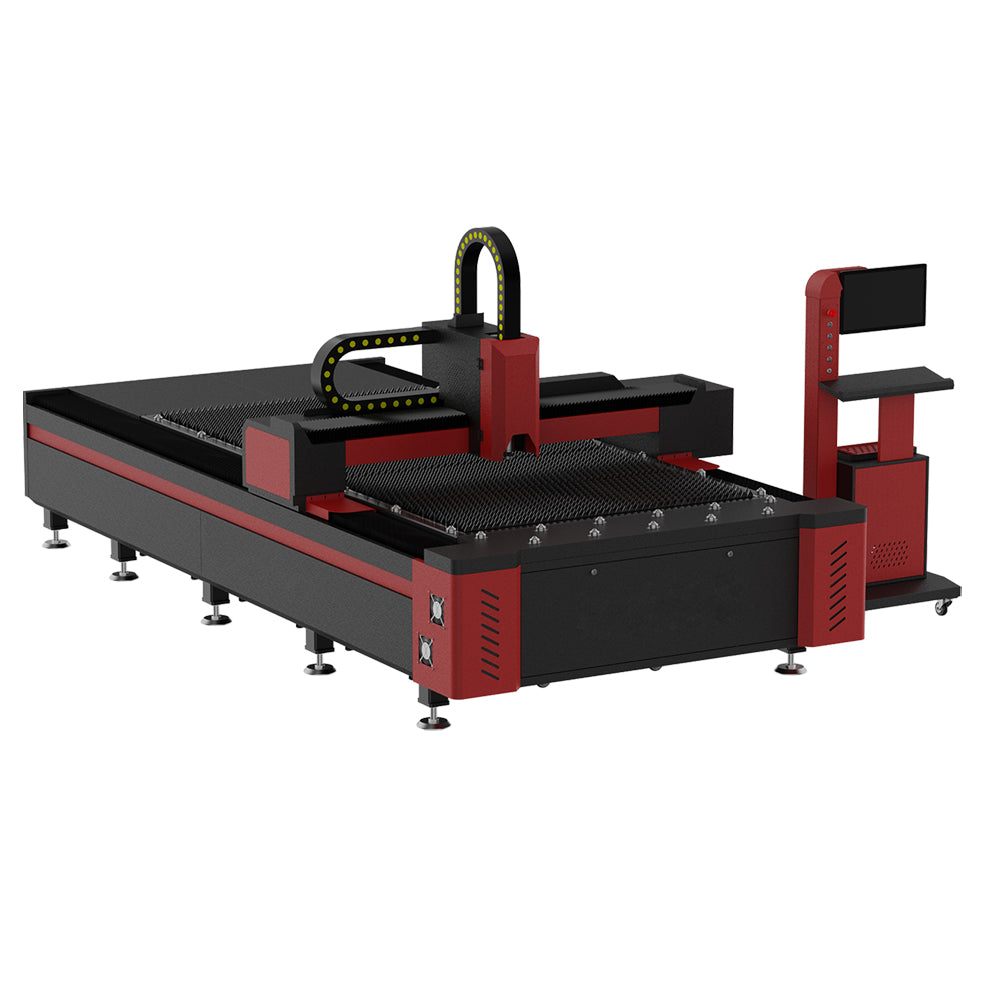
 3 kW Fiber Laser Cutting Machine
SHEET METAL CUTTING · PROJECT PLANNING
Sheet Metal Laser Cutting Solutions
Plan a sheet metal laser cutting setup from the part drawing to the machine layout. Define the material, sheet handling, sample checks and startup scope before choosing a configuration.
Your part briefEquipment layoutSample reviewDelivery & startup
01 / START WITH THE WORK
Give the drawing a production context.
A cutting system has to fit both the finished part and the way material moves through your workshop. Use one brief to connect those decisions.
Material & stock
State the material grade, thickness range and largest sheet. Identify coated or surface-sensitive stock and the finish to retain.
Geometry & finish
Mark critical holes, narrow slots, internal corners and dimensions on a representative drawing. Include the edge condition needed for bending, welding or finishing.
Batches & handling
Share typical quantities, the mix of sheet sizes and how sheets are loaded and parts removed. Include the space available around the worktable.
02 / CHOOSE THE LAYOUT
Compare access, loading and the space around the machine.
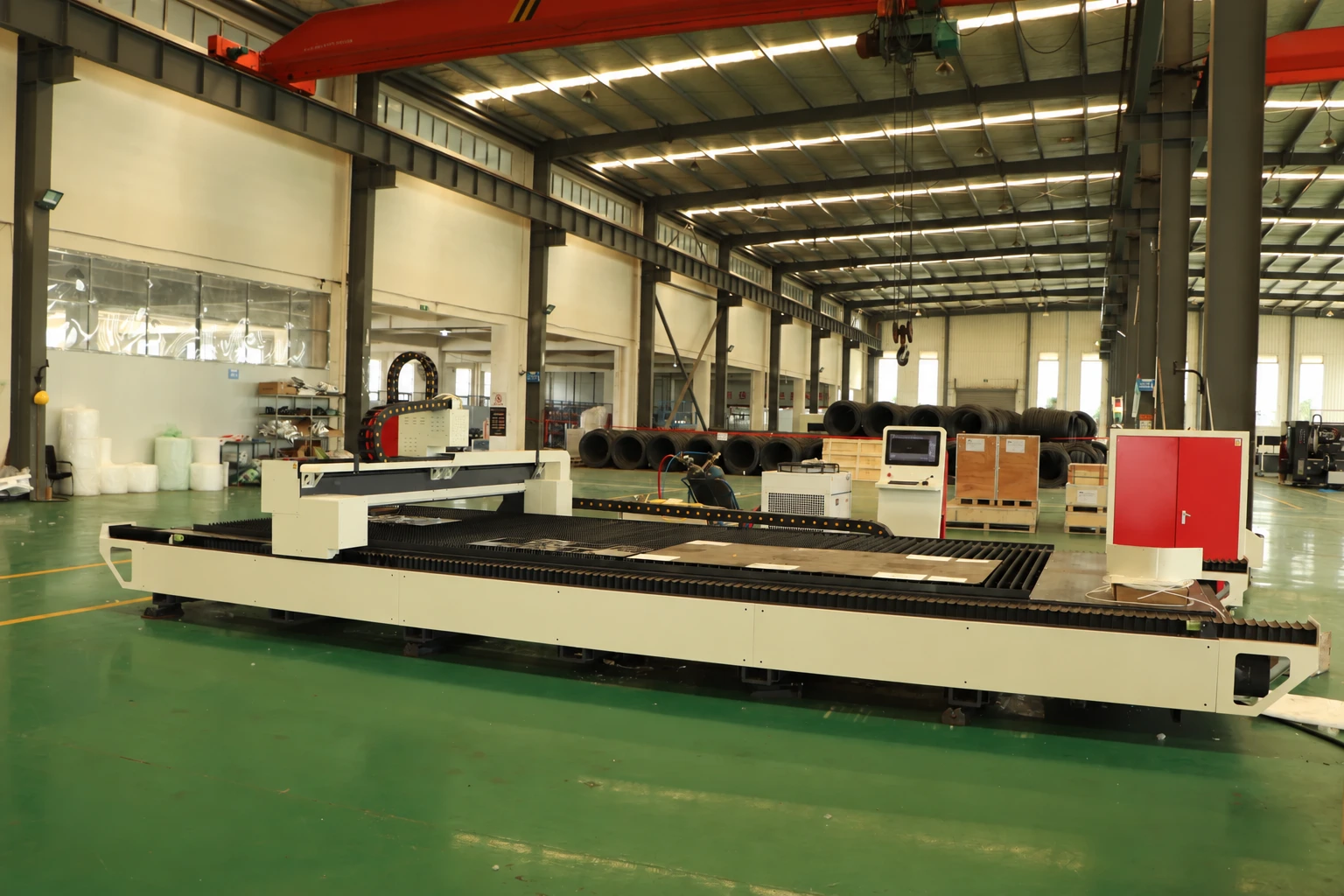
Open-bed and enclosed exchange-table formats appear in the supplied sheet-cutting range. Use the layout discussion to define the complete system, then confirm the exact model and options.
Open-bed format
An accessible worktable keeps the sheet and gantry in view. Review how the sheet reaches the bed, how finished parts are removed and where the operator works.
Plan the surrounding work area, extraction and protective measures with the proposed configuration.
Enclosed exchange-table format
An enclosed cutting area is paired with a table exchange arrangement. Review the loading side and the space required by the moving table as part of the overall layout.
The exchange arrangement alone does not establish output. Loading, part removal and the actual cutting programme need to be reviewed together.
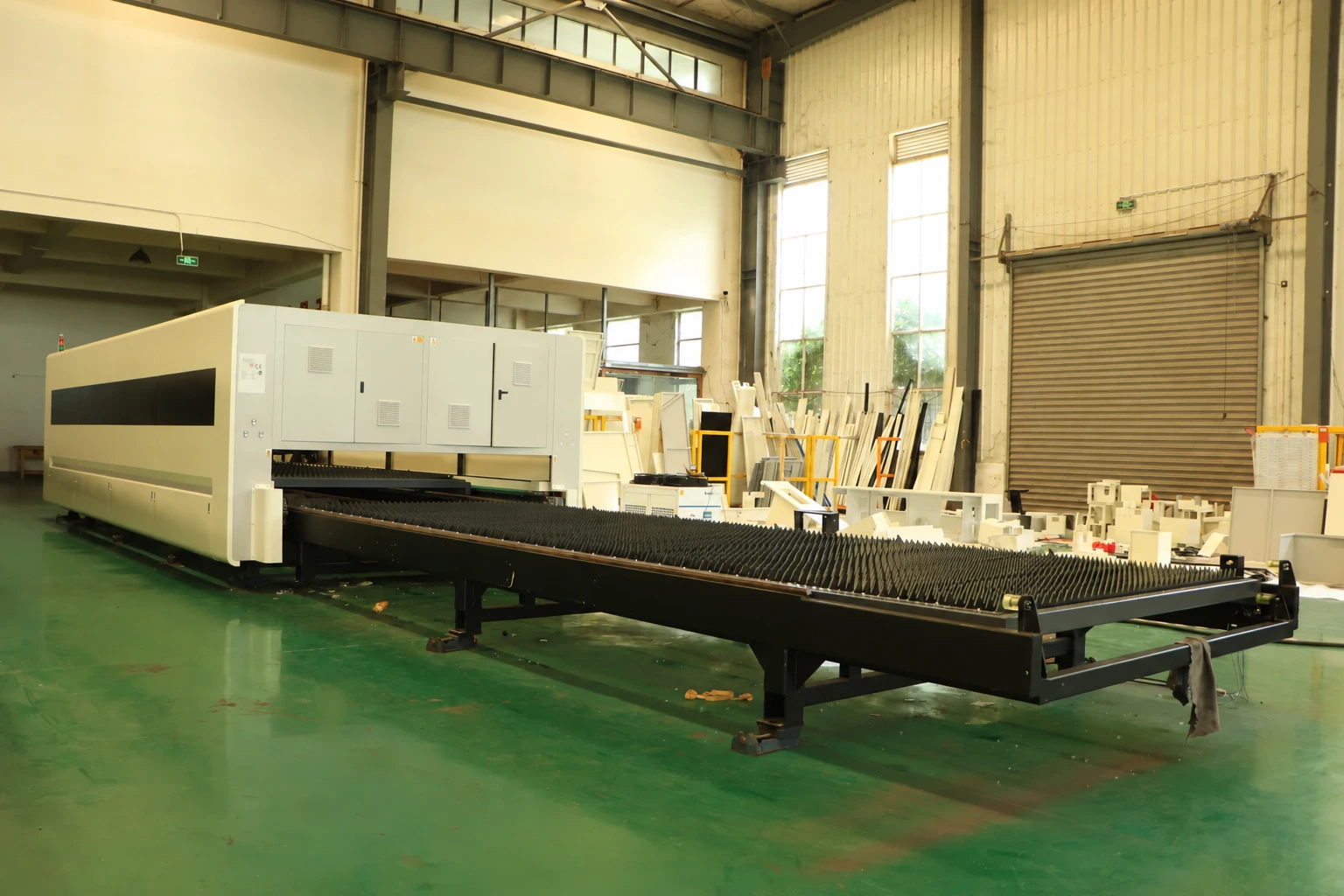
Select laser power, source, head, cooling, controls and extraction as a compatible configuration. The featured product page lists its own technical data; these reference photographs do not establish a cutting thickness, accuracy or production rate.
Explore sheet-cutting equipment · View the featured open-bed model
03 / REVIEW A REPRESENTATIVE SAMPLE
Agree what a useful sample needs to show.
Choose a part that includes the features most likely to affect your decision. Review the sample against a drawing and agreed conditions, then keep the record with the proposed equipment configuration.
- Define the input. Record the drawing revision, material grade, thickness and any surface condition that matters to the result.
- Identify the features to check. Mark critical holes, slots, corners and cut faces. Agree which dimensions and edge conditions need to be assessed.
- Keep the test conditions with the result. Ask for the machine configuration, process settings and measurement method to be recorded with the sample photographs or report.
- Review the next operation. Check the part against its intended bending, joining or finishing step. Resolve changes before confirming the equipment scope.
04 / DEFINE THE DELIVERY SCOPE
Make the quotation practical for your workshop.
Bring equipment, site preparation and support into the same review. The items below form a discussion checklist; the final responsibilities and arrangements belong in the agreed project scope.
Equipment list
- Machine format and working area
- Laser source, cutting head and controls
- Cooling, extraction, software and agreed accessories
Site & transport
- Machine layout, access route and unloading
- Electrical supply and process utilities
- Packing, destination and installation space
Checks & startup
- Agreed sample or acceptance criteria
- Installation, operating guidance and training
- Documents, service contacts and spare-parts scope
Review installation & training · Use the quotation checklist
YOUR NEXT STEP
Bring a drawing. Define the setup.
Start with the material, largest sheet and a representative part. We can then discuss the equipment format, the checks to arrange and the quotation scope.
Photographs show manufacturer equipment references from the supplied Tianqi documentation. They are not a FONLAND customer delivery record or a test report for the featured 3 kW product.